What happens on a coffee tour from Medellín?
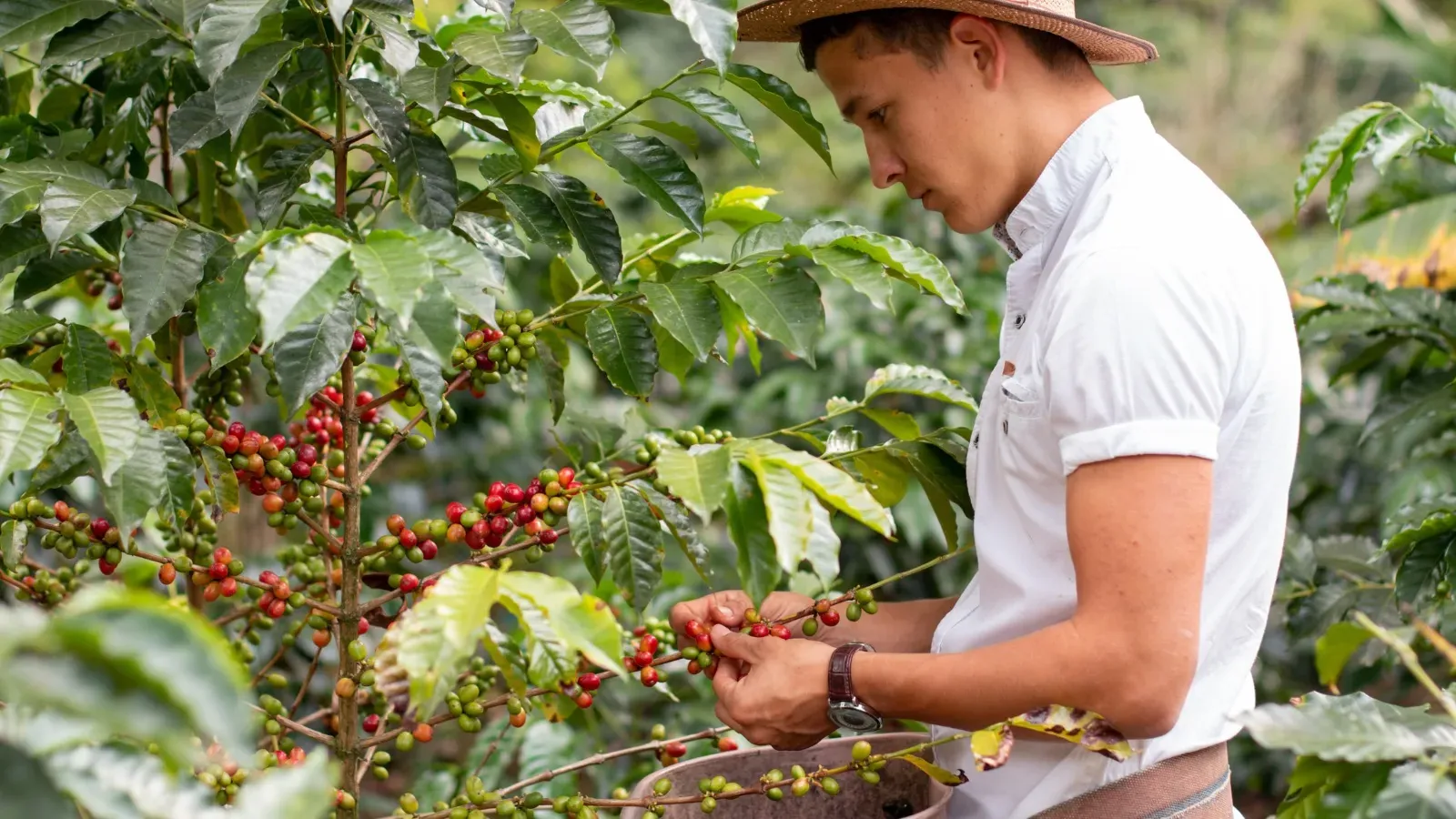
A coffee tour from Medellín is a half-day or full-day trip to a working coffee farm in Antioquia. You walk the coffee plots with a guide, learn to tell ripe cherries from unripe ones, pick beans by hand and finish with a tasting that explains why Colombian coffee tastes the way it does. No prior coffee knowledge is needed.
It suits almost any traveler, whether you drink three cups a day or none. You just need to be comfortable walking on sloped ground, since mountain coffee grows on hillsides. Tours differ mainly in depth: some focus on the farm walk and tasting, while longer ones add coffee history and a country lunch.
What a coffee farm visit usually covers
- Farm walk: how the coffee plant grows and how to spot a cherry that is ready to pick.
- Picking: you harvest red cherries one at a time, just as pickers do during the season.
- Processing: what happens to the bean between the plant and a bag of roasted coffee.
- Tasting: you try the result and learn the vocabulary for aroma, acidity and body.
Why is Antioquia such an important coffee region?
Antioquia is Colombia's second-largest coffee-producing department, with about 117,000 hectares planted across 94 municipalities and roughly 15% of national output. The Southwest subregion produces the most, followed by the East and West. Medellín also has a special place in coffee history: the National Federation of Coffee Growers was founded here in 1927.
That heritage runs deep in paisa culture: mule trains, known as arriería, once carried coffee down from the mountains, and the year-end harvest still draws tens of thousands of pickers.
Antioquia vs. the Coffee Triangle
Many visitors assume every Colombian coffee farm sits in the famous Coffee Triangle. In fact, the Coffee Cultural Landscape of Colombia, a UNESCO World Heritage site since 2011, covers parts of Caldas, Quindío, Risaralda and Valle del Cauca, not Antioquia. The upside of basing yourself in Medellín is that you can see a coffee farm as a day trip instead of planning a separate journey south.
Got extra days? Head to Southwest Antioquia
The Southwest is Antioquia's coffee heartland. According to 2018 figures from the National Federation of Coffee Growers in Antioquia, towns such as Andes, Betania, Ciudad Bolívar, Concordia, Fredonia and Salgar are among those that hire the most pickers at harvest time. Jardín, about 134 km from Medellín at an average altitude of 1,750 m and part of Colombia's Heritage Towns Network, is a good overnight base for visiting farms at a slower pace.
From cherry to cup: how coffee is processed
Coffee starts as a red cherry picked by hand. On the farm, the skin and pulp are removed, the sticky mucilage is broken down by fermentation or by machine, and the beans are washed and dried into parchment coffee. Later they are hulled, roasted and ground. This wet method is what gives Colombia its reputation for washed coffee.
- Picking. Every cherry is picked by hand. According to Café de Colombia, one pound of roasted coffee comes from about 1,900 hand-selected cherries.
- Pulping. The red skin and pulp come off, leaving the bean coated in a sweet, sticky layer called mucilage.
- Fermenting and washing. The mucilage is removed by fermentation or with demucilaging machines, then the beans are rinsed with clean water.
- Drying. Beans are dried into parchment coffee with 10–12% moisture, the form in which farmers sell it within Colombia.
- Hulling and sorting. The parchment layer is removed and defective beans, called pasillas in Colombia, are separated out.
- Roasting and grinding. Roasting develops the color, aroma and flavor that end up in your cup.
Tip: ask your guide which varieties the farm grows. Castillo, Caturra, Typica and Bourbon are common in Colombia, where coffee is generally grown at roughly 1,200 to 2,000 meters above sea level.
How does a coffee cupping work?
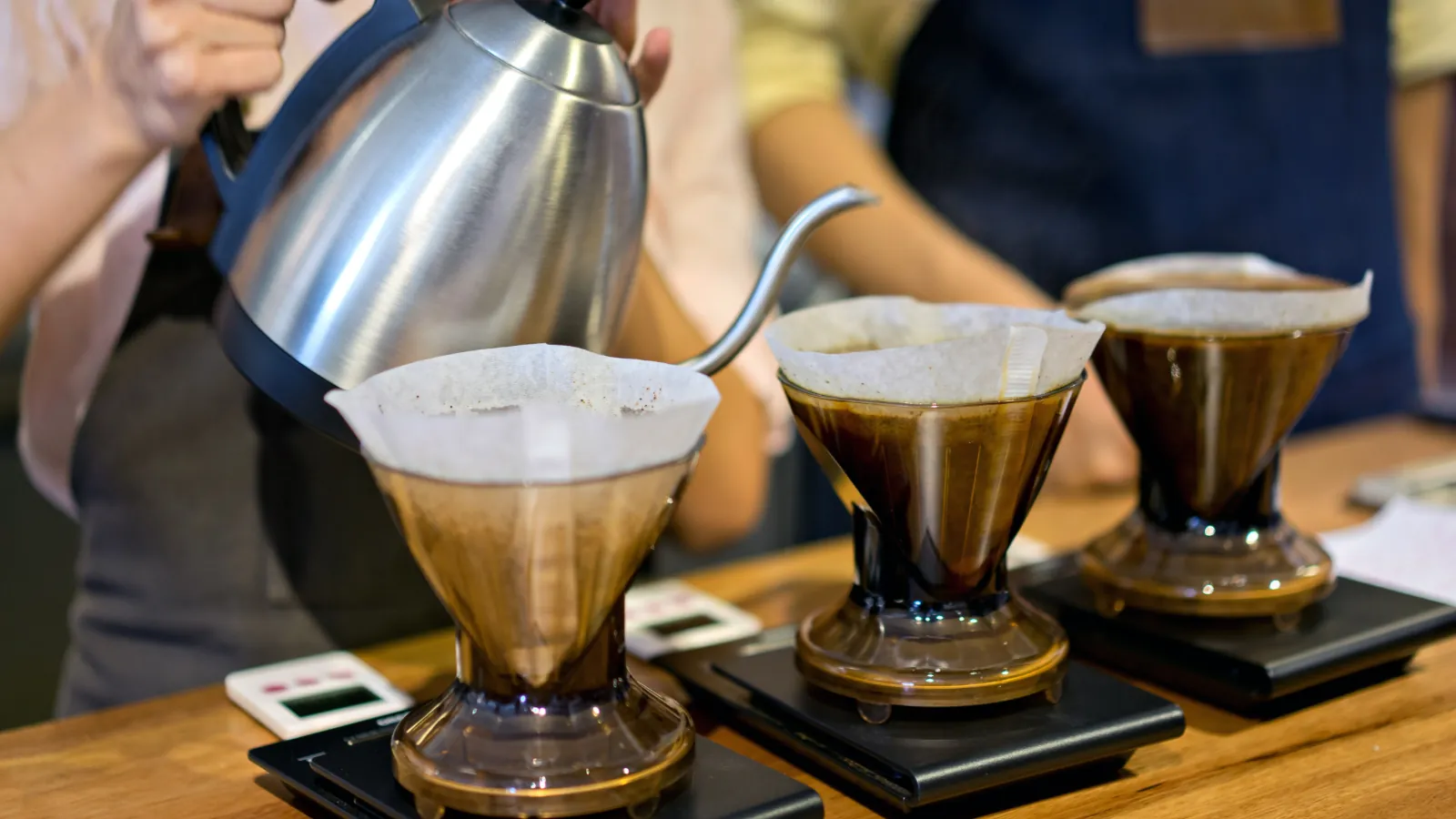
A cupping is a structured way to taste coffee. First you smell the freshly ground coffee, its fragrance; then the same coffee after hot water is added, its aroma. Finally you slurp it from a spoon to judge acidity, body, flavor and aftertaste. There are no wrong answers: the goal is to put into words what you taste.
Five words to use at the tasting table
- Fragrance: the smell of the dry, freshly ground coffee.
- Aroma: the smell once hot water is added.
- Acidity: a bright, fresh, fruit-like sensation. It is not the same as sour.
- Body: how the coffee feels in your mouth, from light to heavy.
- Aftertaste: what lingers on your palate after you swallow.
The profile associated with Colombian coffee is mild and clean, with good acidity, medium to high body and a pronounced aroma. Since 2007, "Café de Colombia" has also been protected in the European Union as a geographical indication.
Coffee Experience or Coffee Experience+: which one should you book?
Living by Armóniko's front desk coordinates two coffee tours. The Coffee Experience takes 3 hours, with a morning or afternoon departure, and covers the farm walk, bean picking and a cupping. The Coffee Experience+ runs from 9:30 a.m. to 3:30 p.m. and adds coffee history, a cupping workshop in traditional coffee-picker attire, a farm lunch and a souvenir.
| Feature | Coffee Experience | Coffee Experience+ |
|---|---|---|
| Duration | 3 hours | Full day, 9:30 a.m.–3:30 p.m. |
| Schedule | 9:30 a.m. – 12:30 p.m. or 2:00 p.m. – 5:00 p.m. | 9:30 a.m. – 3:30 p.m. |
| On the farm | Ecological coffee-farm trail and bean picking | Ecological trail and bean picking |
| Tasting | Coffee cupping | Cupping workshop in traditional coffee-picker attire |
| Food | Not listed as included | Traditional Colombian lunch, with vegetarian and vegan options |
| Extras | — | Introduction to coffee history and culture, plus a souvenir |
| Both include | Round-trip transportation, bilingual professional guide and travel insurance | Round-trip transportation, bilingual professional guide and travel insurance |
How to choose
- Short on time: the 3-hour Coffee Experience leaves half the day free for other stops on your Medellín 3-day itinerary.
- Serious coffee lover: the Coffee Experience+ is worth it for the cupping workshop, the history segment and the farm lunch.
- Vegetarian or vegan: the Coffee Experience+ lunch has an option for you; mention it when you book.
- No Spanish: both tours come with a bilingual professional guide.
When is the best time for a coffee farm tour in Antioquia?
Coffee tours run year-round, but Antioquia's main harvest runs from September to December, peaking in October and November, and according to the National Federation of Coffee Growers yields about 70% of the department's output. The rest comes from a smaller first-half harvest called traviesa or mitaca. Harvest season means more red cherries and busier farms.
Outside those months the tour is still worthwhile: the plants carry cherries at different stages of ripeness, and learning to tell them apart is part of the fun. Do check the forecast, as mountain weather changes quickly.
Morning or afternoon?
If you book the Coffee Experience, the 9:30 a.m. departure frees up your afternoon in the city. The 2:00 p.m. slot suits you if you would rather have a slow breakfast, stroll around Laureles or rest before heading out.
What should you pack for a coffee tour?
For a coffee tour from Medellín, pack comfortable clothes, closed shoes with good grip, a light rain jacket, sunscreen, insect repellent and water. Bring some cash in Colombian pesos in case the farm sells coffee to take home, and a charged phone for photos of the mountains and coffee plots.
- Footwear: sneakers with firm soles or light hiking boots; paths can be damp and steep.
- Long pants: protection from branches and bugs.
- Layers: strong sun can turn into rain within the same afternoon.
- Cash: rural businesses do not always take cards.
Pair it with other local flavors
Our guide to Colombian fruits to try in Medellín covers lulo, soursop and chontaduro, and if you have a full free day, a Guatapé day trip from Medellín is Antioquia's other classic. You will find every option, with duration, schedule and inclusions, in our Medellín and Antioquia tours.
Staying in Laureles: coffee before and after your tour
Staying in Laureles keeps a coffee tour easy: you book it at the front desk, round-trip transportation is included, and you come back to rest afterwards. At Living by Armóniko, across from Segundo Parque de Laureles, an à la carte breakfast with specialty coffee at Botswana Café Bar is included in your stay until 10 a.m.
All 14 apartment-style suites at our boutique hotel in Laureles have an equipped kitchen and a private balcony, a nice spot to enjoy any coffee you bring back from the farm. To book either experience, message us on WhatsApp with the name of the tour.